The study published in The Lancet on 4 April 2026 shows that Switzerland has the world’s second-highest 5-year survival rate for childhood cancer. In the 2015-2019 comparison period, only Norway ranks slightly higher at 89.0%, compared with 88.5% for Switzerland.
The comparison with Switzerland’s European neighbours is particularly striking: at 88.5%, Switzerland clearly ranks ahead of Italy (86.9%), France (86.3%) and Germany (85.2%). These findings show just how strongly Switzerland performs in direct European comparison.
Why does this difference matter so much? Because behind every percentage point are children, adolescents and families. Children and adolescents with their whole lives ahead of them. In Switzerland, around 350 children and adolescents are diagnosed with cancer every year. The fact that survival is higher here than in comparable countries means, very concretely, that more children and adolescents have the chance to recover, grow up and go on living their lives. Compared with Germany, that difference amounts, in simplified terms, to around 12 children each year – almost half a school class. This is exactly why SPOG does what it does: we conduct research so that children with cancer can have a future.
For us at SPOG, this result is no coincidence. It reflects 50 years of consistent childhood cancer research in Switzerland. Since 1976, SPOG has worked to ensure that children and adolescents in all specialised centres have access to modern, evidence-based therapies and clinical trials. It was shown early on that patients treated within clinical studies have significantly better survival.
The fact that Switzerland performs so strongly today confirms something important for us: consistent research, national collaboration and high quality standards make a measurable difference. It also strengthens our resolve to continue on this path – for better chances of cure, fewer late effects and a better future for children and adolescents with cancer.
SPOG continues to pursue this goal with determination today: in 2025, it coordinated a research portfolio of 66 studies, opened 19 studies across its member clinics and enabled 203 patients to access participation in a clinical study.
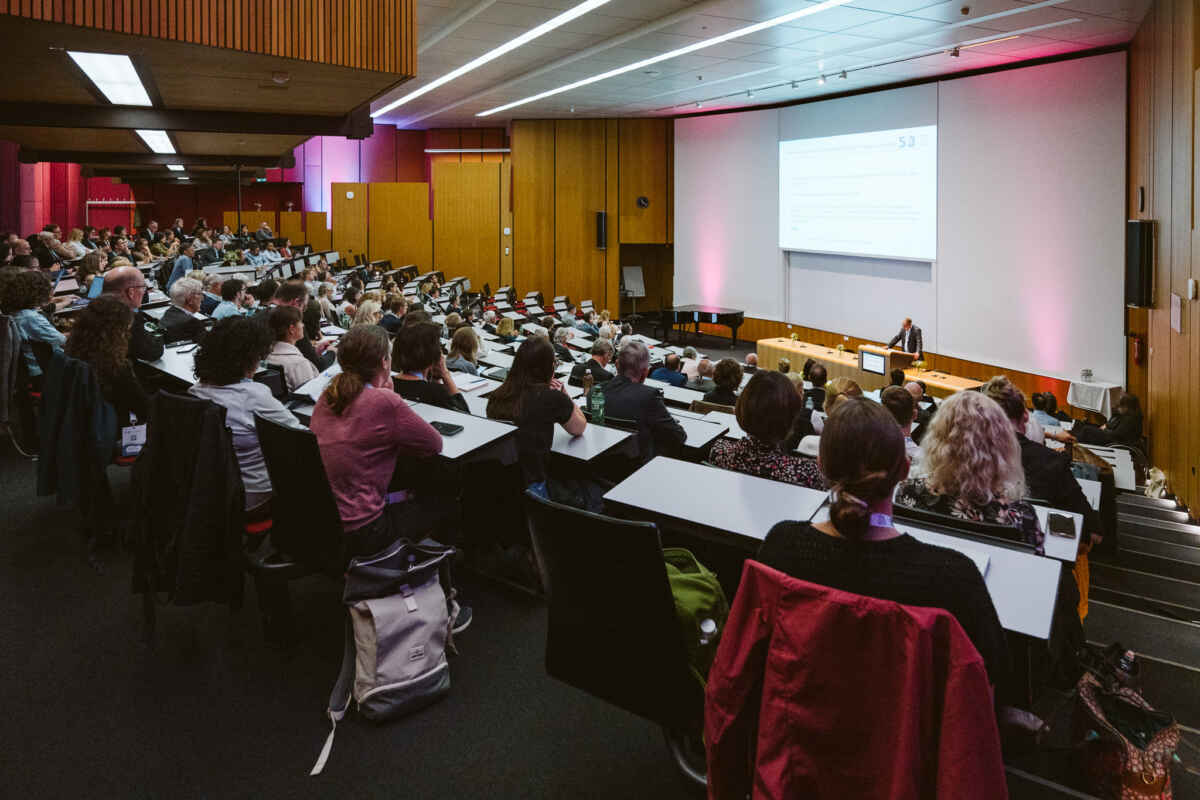
For us, SPOG’s 50 years are not only an occasion to look back, but also to look ahead: to new therapies, more precise oncology, stronger involvement of those affected – and to our long-term goal that all children and adolescents with cancer can be cured. Information and registration for the anniversary symposium can be found here: SPOG 50 Years Anniversary Symposium
References
Allemani C, Di Carlo V, Ssenyonga N, Baloch FK, Kuehni C, Girardi F, Goić C, Sophiea MK, Šekerija M, Espinoza-Vallejos C, Dadouli K, Sugiyama H, Galceran J, Cañete-Nieto A, Ragusa R, Moreno F, Stiller C, Coleman MP; CONCORD Working Group. Progress towards the WHO Global Initiative for Childhood Cancer target of 60% 5-year survival for all childhood cancers combined, 1990-2019 (CONCORD-4): a Cancer Survival Index derived for 68 countries by analysis of individual records for 613 021 children from 307 population-based cancer registries. Lancet. 2026 Apr 4;407(10536):1335-1359. doi: 10.1016/S0140-6736(26)00189-3. Epub 2026 Mar 26. PMID: 41905383.