In 1976, the year the Swiss Paediatric Oncology Group (SPOG) was founded, cancer in children was usually fatal. Today, 50 years later, 88.5 per cent of affected children and young people in Switzerland survive. An incredible leap forward.
What made this development possible? Who were the pioneers who joined forces back then to find better treatments for children with leukaemia, lymphoma, liver or brain tumours, to name just a few childhood cancers?
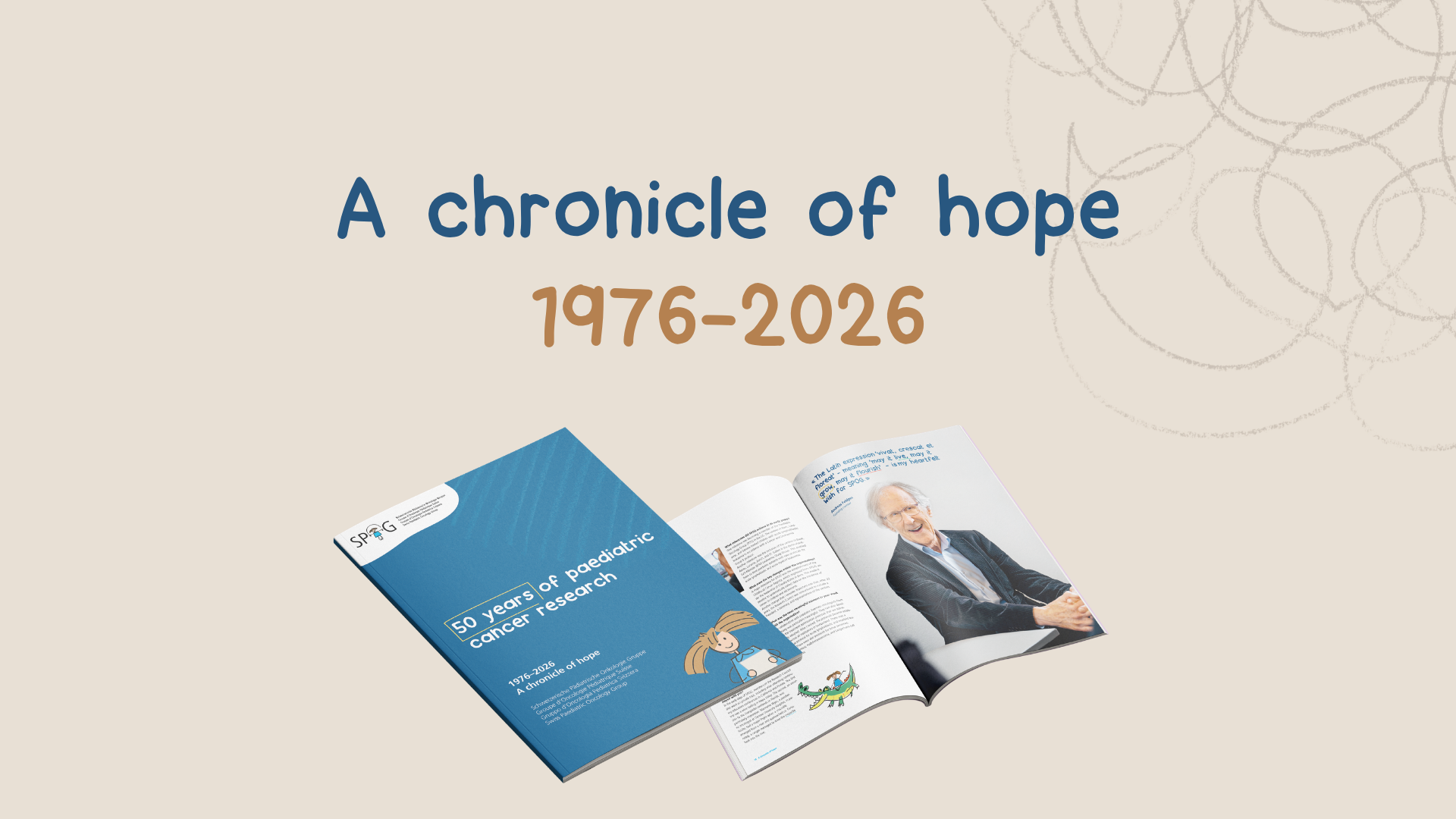
To mark its 50th anniversary, SPOG has produced a chronicle tracing the history of childhood cancer research in Switzerland. Andreas Feldges, a paediatric oncologist who was there at the founding, speaks in the chronicle: “The aim was to develop multinational, interdisciplinary studies for the treatment of paediatric cancer.” This was driven by the vision of improving the chances of survival for children and young people with cancer. International collaboration was a fundamental requirement, as childhood cancer is fortunately rare – only by working together could the paediatric researchers treat and monitor enough patients consistently to identify the most effective therapy.
Impressive medical advances
For a long time, the focus was on the survival of children and young people. In their contributions, former SPOG President Felix Niggli and paediatric oncologist Maja Beck Popovic highlight how paediatric oncology and treatment protocols have evolved, and how encouragingly the survival rate of those affected has risen.
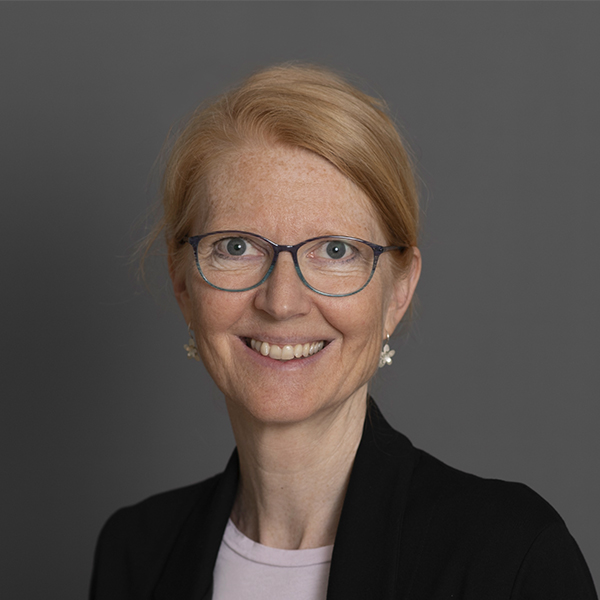
This has also led to a shift in the focus of research. “Today, the focus is no longer on wheter a child survives,” emphasises SPOG President Katrin Scheinemann, “but rather on how they survive – ideally with a quality of life and the same opportunities as if they had never had cancer.” In research, the focus is shifting to aftercare and minimising long-term effects. Modern technologies are opening up innovative, personalised treatment options.
Strict requirements for research involving human subjects
Research involving human subjects has become increasingly regulated at both international and national levels. The aim is to protect patients and ensure the quality of the data. However, this has made it increasingly complex and resource-intensive to conduct a study, writes SPOG Director Isabelle Lamontagne-Müller. In the past, a single secretary was sufficient to support the researchers. Today, 18 specialists at the SPOG Coordinating Centre handle all non-medical tasks.
The chronicle provides a varied insight into SPOG’s paediatric cancer research in Switzerland. Compared with adult oncology, paediatric cancer research has achieved something unique, says Katrin Scheinemann: “Every child in Switzerland under the age of 18 who has an oncological disease has access to the best treatment available at the current time.”
The “Chronicle of Hope” is available to download here. If you would like a printed copy, please contact partnerrelations@spog.ch.