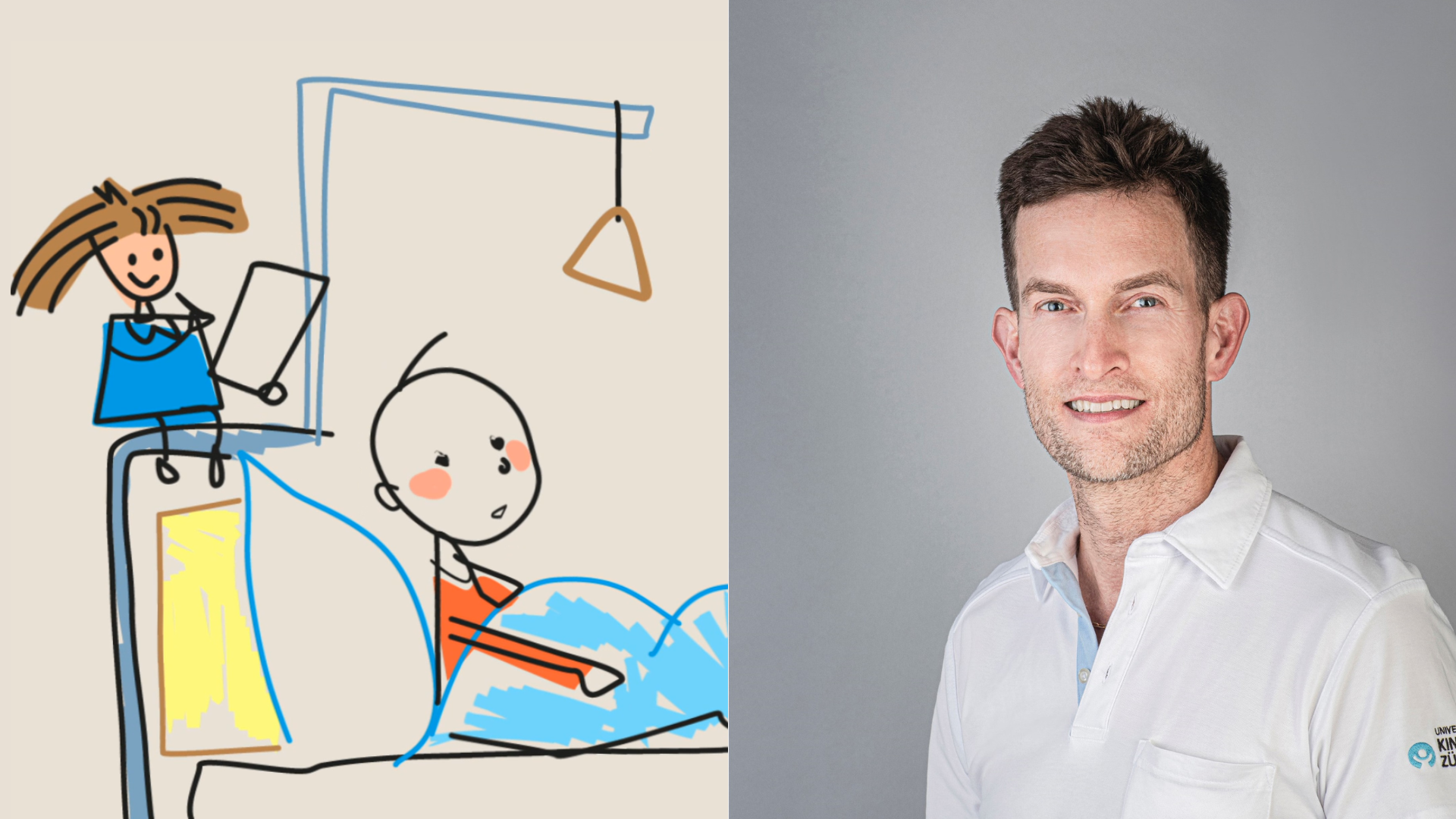
Each of the 66 studies in the SPOG portfolio has a national study chair. We spoke with paediatric oncologist Nicolas Gerber about the role of the Swiss national study chair in international studies.
What motivated you to specialise in paediatric oncology?
Paediatric oncology combines highly complex medicine with a deeply meaningful purpose. It is a highly specialised field that requires a broad perspective: Not only can every organ system be affected by disease or therapies but each cancer diagnosis also places a heavy emotional burden on patients and their families. Treatments last many months and patients often require more than one course of therapy. Follow-up care can continue for many years. I consider it a privilege to be able to support these families over long periods and often quite intensively.
You are now overseeing your fourteenth study for SPOG as a national study chair. What exactly are the responsibilities of a national study chair?
SPOG studies are typically multinational studies initiated by a centre abroad. National Study Chairs (NSCs) are the medical link between the international study chair and the treating paediatric oncologists in Switzerland and serve as contacts for both sides. They are part of international study groups, create the structural prerequisites for conducting studies in Switzerland, and support treating centres in opening and running them.
What does this involve in practice?
The process usually begins with presenting an international study first to an SSPHO Tumour Working Group and then to SPOG. If the study is approved by the SPOG General Assembly and a national study chair is appointed, the first step in certain studies is to establish national reference centres depending on tumour type (e.g. in pathology, radiology, or radiotherapy). A national data centre is also established. In some studies, this centre has extensive responsibilities while in others, data from the individual participating oncology centres flow directly to the international study coordinating centre.
What additional responsibilities are involved?
The study chair reviews the study documents prepared by the SPOG Coordinating Centre. These include patient information brochures and informed consent forms (both of which must comply with Swiss requirements) as well as Switzerland-specific appendices to the study protocol. The study chair is also responsible for overseeing medical training for the hospitals; in some cases, they assess whether patients meet the eligibility criteria, advise hospitals on patient treatment, or assist with questions regarding study conduct. The aim is to conduct the study to a high standard of quality so that patients benefit from modern diagnostics and standardised therapies. The data obtained serve to further develop therapies for a future generation of patients.
«National Study Chairs (NSCs) are the medical link between the international study chair and the treating paediatric oncologists in Switzerland and serve as contacts for both sides.»
PD Dr Nicolas Gerber
Senior Consultant in Oncology and Head of the Oncology Clinical Trials Unit at the University Children’s Hospital Zurich
Are medical questions the main focus, or is it more a matter of organisation and study procedures?
Both are equally important. Medical questions include the interpretation of inclusion criteria, the assessment of side effects, and the adjustment of treatments as well as broader therapeutic recommendations. Organisational questions concern procedures, documentation, data collection, or the implementation of protocol amendments across all centres. Fortunately, many non-medical questions are handled by the SPOG Coordinating Centre, thereby allowing national study chairs to focus on medical aspects.
How much coordination is required with the international study chair?
The greatest need for coordination arises at the beginning when setting up a study for Switzerland. Topics that arise later include participation issues in specific situations, safety reporting, and protocol amendments. National study chairs can also discuss treatment recommendations for patients in special circumstances with the international study chair. The international study chair generally has extensive experience and access to data from all patients in the study (and often also from previous studies). Collaboration is generally constructive and based on mutual trust.
How should the exchange with those responsible at the various SPOG member hospitals be understood?
After a study has been opened at participating hospitals, communication usually focuses on specific questions relating to patients. Such exchanges often take place by email, telephone, or video call or during a presentation at a joint tumour board. In some studies, many functions are organised at the national level. This means that the national study coordinating centre checks whether all potential patients meet the eligibility criteria, reviews the study data, and discusses all study patients in a structured tumour board. Other studies are organised in a more centralised way; apart from advice on treatment-related questions, most matters are handled directly between the treating centre and the international study coordinating centre.
«Fortunately, many nonmedical questions are handled by the SPOG Coordinating Centre, thereby allowing the national study chairs to focus on medical aspects.»
PD Dr Nicolas Gerber
Vice President of Swiss Paediatric Oncology Group SPOG
How can you, as a national study chair, be sure that all hospitals comply with the study protocol correctly?
Clear communication, training, and standardised documents all contribute to this. The SPOG Coordinating Centre plays a central role here; for example, it carries out monitoring and works together with the hospitals to ensure that deviations are avoided. Open communication with the treating hospitals is essential.
How does the work of a national study chair help these families?
It enables comprehensive access to modern, evidence-based therapies and helps to continually improve diagnostics and treatments. In the long term, all children and adolescents with cancer benefit from the insights gained in these studies.
How do you explain to adolescents, children, and their parents what it means to participate in a clinical study?
The treatment in a SPOG study often corresponds to the current standard of care. This means that the discussion focuses on the treatment itself. Patients benefit from participating in a study – for example, through standardised diagnostics and treatment recommendations – and the knowledge gained can benefit future patients. These are two factors that encourage most families to participate.
«Patients benefit from participating in a study – for example, through standardised diagnostics and treatment recommendations – and the knowledge gained can benefit future patients.»
PD Dr Nicolas Gerber
Senior Consultant in Oncology and Head of the Oncology Clinical Trials Unit at the University Children’s Hospital Zurich
What are the greatest challenges in conducting an international childhood cancer study in Switzerland?
Regulatory requirements, a high administrative burden, and a small number of patients represent a major challenge. This means that each study enrolment requires considerable time and financial resources. In the physician-initiated studies typical of paediatric oncology, these costs are not covered by pharmaceutical companies. In addition, negotiating contracts with partner institutions often takes a very long time.
As a national study chair, are you also involved in publishing the study results?
Yes, the study chairs are usually involved not only in data collection but also in data interpretation and publications.
What is the most rewarding aspect of your work as a national study chair, and what is the most challenging?
The most rewarding aspect is seeing that clinical studies lead to lasting improvements in the prognosis for children and adolescents with cancer. However, the most challenging aspect is having to accept how slowly processes sometimes move. On one hand, this is due to the fortunately small number of patients in our field; some studies remain open for 10 years until the required number has been reached. On the other hand, increasing regulatory hurdles and expanding bureaucracy are slowing progress.
PD Dr Nicolas Gerber
studied medicine in Geneva and trained as a paediatrician at the University Children’s Hospital Zurich (Universitäts-Kinderspital Zürich). He worked for two years as a study physician at a brain tumour study centre in Würzburg before specialising in paediatric oncology in Zurich. In addition, Gerber completed specialist training in pharmaceutical medicine. He currently works as Senior Consultant in Oncology at the University Children’s Hospital Zurich, where he leads the Clinical Trials Unit of the Department of Oncology. Since 2020, Gerber has been Vice President of SPOG and leads the Protocol Governance Committee (PGC).
Brigitte Casanova
Brigitte Casanova supports SPOG communication projects; as a Germanist, she complements the science-oriented team at the Coordinating Centre.
More articles from Brigitte Casanova